14/09/2026
By: Steven Thorpe | Omni, CEO
Living on the most isolated inhabited continent on earth does not make us immune to global shocks. Covid-19 emptied our supermarket and pharmacy shelves, and war in Ukraine and the Middle East has reshaped what we pay for fuel and fertiliser.
The protection our remoteness once brought us also counts for nothing when the supply chains we rely on to sustain our defence sit beyond our shores.
The lesson for defence is not that Australia must build everything it needs; it’s that we must be able to keep it running when the lines of communication are cut.
The sovereign capability debate is largely centred on Australia’s ability to build things here. Sustainment is the quieter question, and answering it properly means being clear about three different things: what we should build, when we should buy, and where we can bolster what we already have.
What we should build
Some capability must be sovereign because the alternative is to queue behind other nations. When a conflict reverberates around the world, every customer of a global production line wants the same thing at the same moment, and allocation decisions are beyond our control. Australia should not be waiting in line for its own defence.
The component parts of a strong industrial base are already here: the engineering expertise, the appetite to take on hard problems, the geography to build and test at scale, and a national network of Australian primes, subcontractors and small suppliers. What they need is focused attention; the kind the Government set out in its Defence Industry Development Strategy, which puts industry at the centre of national defence.
When we should buy
For decades, Australia has bought everything from aircraft to ships and submarines abroad. It will never be cost-effective, or even practical, to build everything. A nation of our size will never sustain every production line.
It’s crucial to buy where the platform is mature, where a line already exists at scale, and where our requirement is not meaningfully different from our allies’.
What matters most is buying on the right terms. Australia must hold the intellectual property, the technical data, the right to repair and modify, and the ability to manufacture the components that fail first. A purchase that leaves us dependent on the seller for every deeper repair is not an acquisition; it’s a subscription.
Where we can bolster
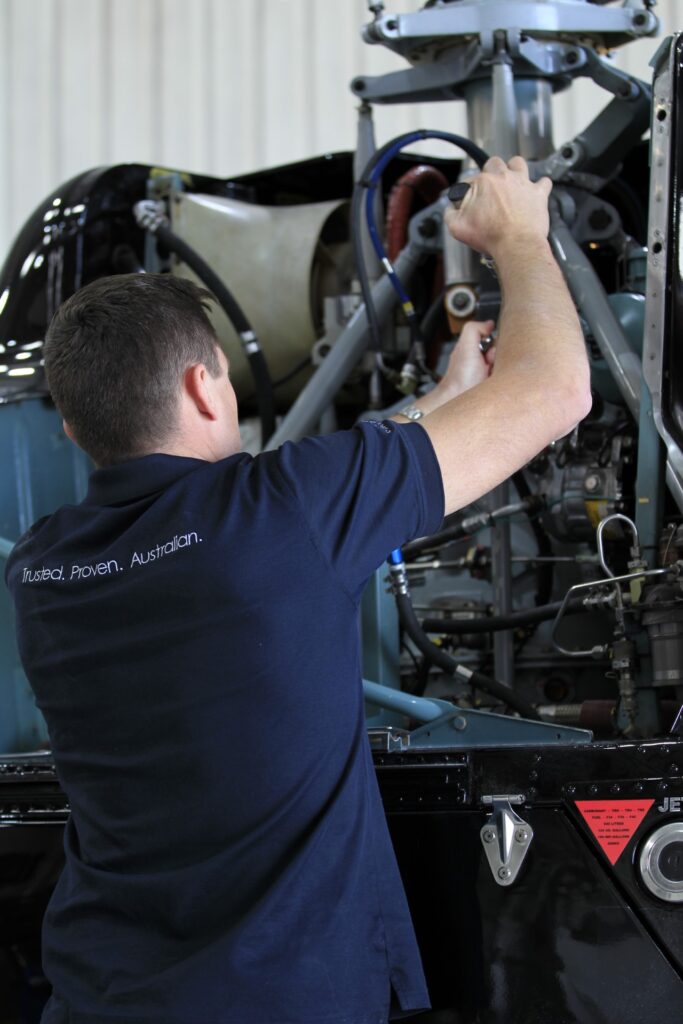
Between building and buying sits the largest opportunity, and possibly the one that is discussed the least. Every platform bought overseas arrives with a question attached: who keeps it running? The answer should be Australians, with Australian skills, on Australian soil.
AUKUS is an example of where we’re relying on our close, trusted allies to source a capability that doesn’t yet exist here. Those submarines will need specialist maintenance for decades, and because Australia has never had a nuclear industry, we have very few people qualified to do that work.
The expertise sits in the US and UK, and it’s the kind of skill that can only be passed on by people who already have the experience. Both our AUKUS partners have integrated stewardship of nuclear power across civil and defence sectors. In Australia, this will be fundamental to the success of AUKUS Pillar One. Done well, that means an Australian technician who today would send a component back to Barrow or Newport News is, in a decade, certified to do the work in Adelaide. Omni’s partnership with UK firm Samarkand exists to shorten that decade, bringing practitioners with the experience into an Australian company rather than renting it back one job at a time.
The same is true beyond our own borders. Omni has worked alongside our island neighbours for years on maintenance, aircraft repair, aerial surveillance and infrastructure support. Sovereignty doesn’t stop at Australia’s coastline, and a country that cannot sustain itself is in no position to sustain anyone else. As a middle power what we should want is independence with our partners, not from them: the depth to carry our share of AUKUS, and the capacity to be a contributor to regional security rather than a claimant on it.
Sustainment in a time of need
At the end of the day, self-reliance, sovereign industrial capability and national resilience are all as important as each other in ensuring Australia is threat-ready, or able to sustain its capabilities in the event of international unrest. And a threat-ready Australia is not only an Australian interest. An industrial base that can sustain itself is what lets us hold up our end of AUKUS and be a net contributor of security in the IndoPacific rather than a net consumer of it. Distance won’t protect us.
We need to build what we can’t afford to have switched off, buy what we can’t sensibly make, but buy it on terms that leave us able to keep it running. And most critically; bolster everything else with Australian skills, held here.